Ballelujah
A 3D local 1v1 pinball-tower-defence hybrid where two players build tower loadouts on separate boards and battle for the highest score before time runs out — set in a mythological Realm of the Gods.
At a glance
Unity
Engine
C#
Language
8
Team size
Year 4
Year
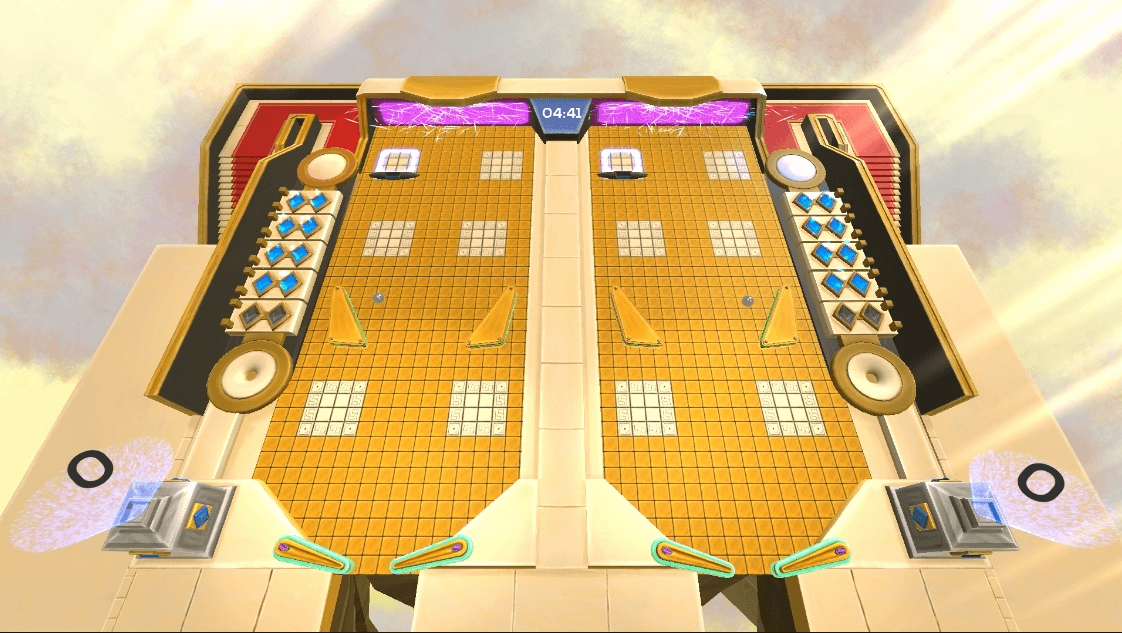
Game screenshot
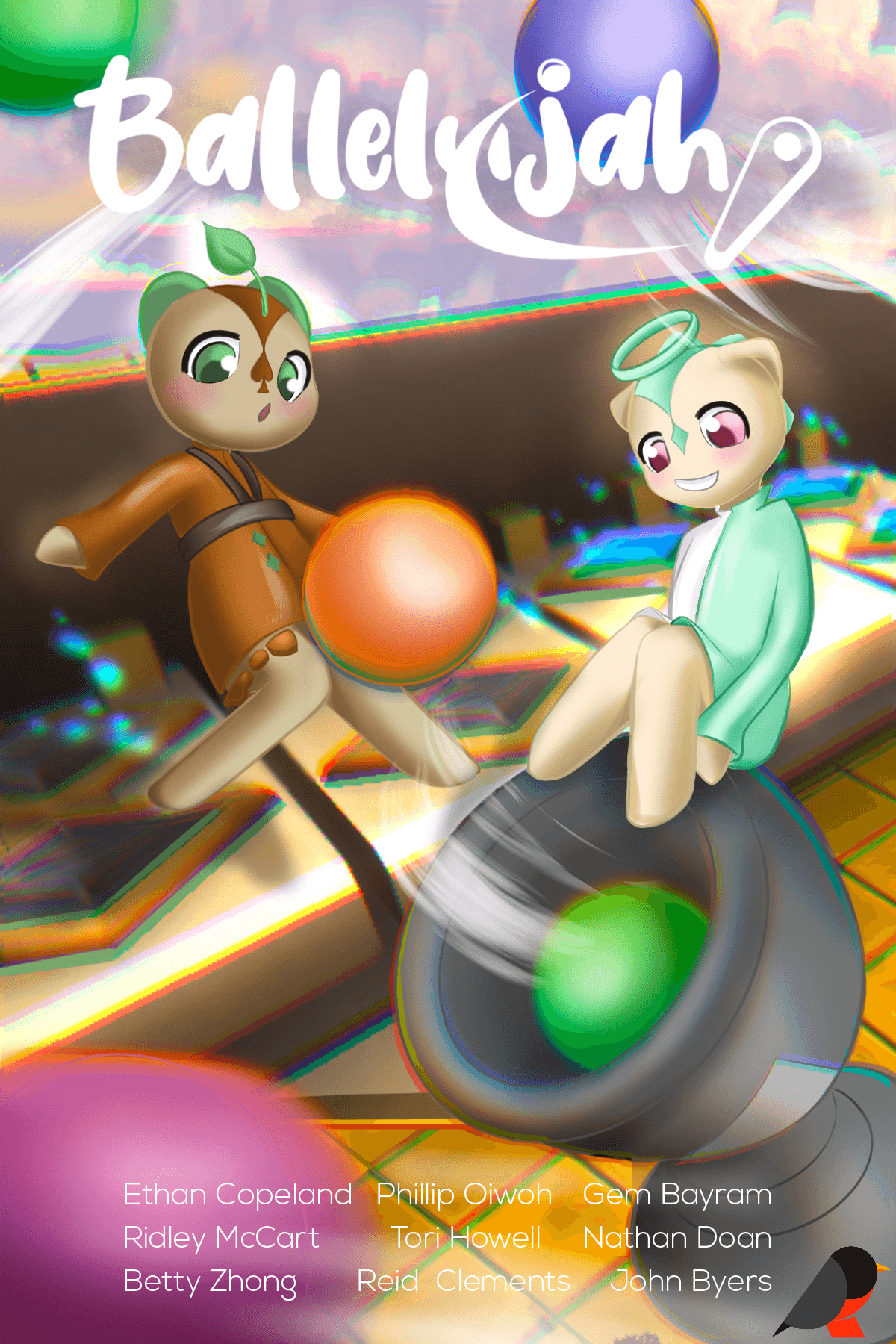
Poster
Concept
Ballelujah was developed at Brock University under the studio name Round Robin Games. The concept merges two distinct genres — classic pinball and tower defence — into a local competitive experience where both players are active simultaneously on split boards.
The setting is the Realm of the Gods: a floating Asgard/Olympus-inspired arena where elemental Nomad characters (Fire, Water, Earth, Air) use powers to summon towers and abilities. High-energy and mythological, built for casual competitive play.
Audio was implemented using FMOD Studio with dedicated sound banks for ball physics, BGM, tower interactions, Nomad abilities, and UI.
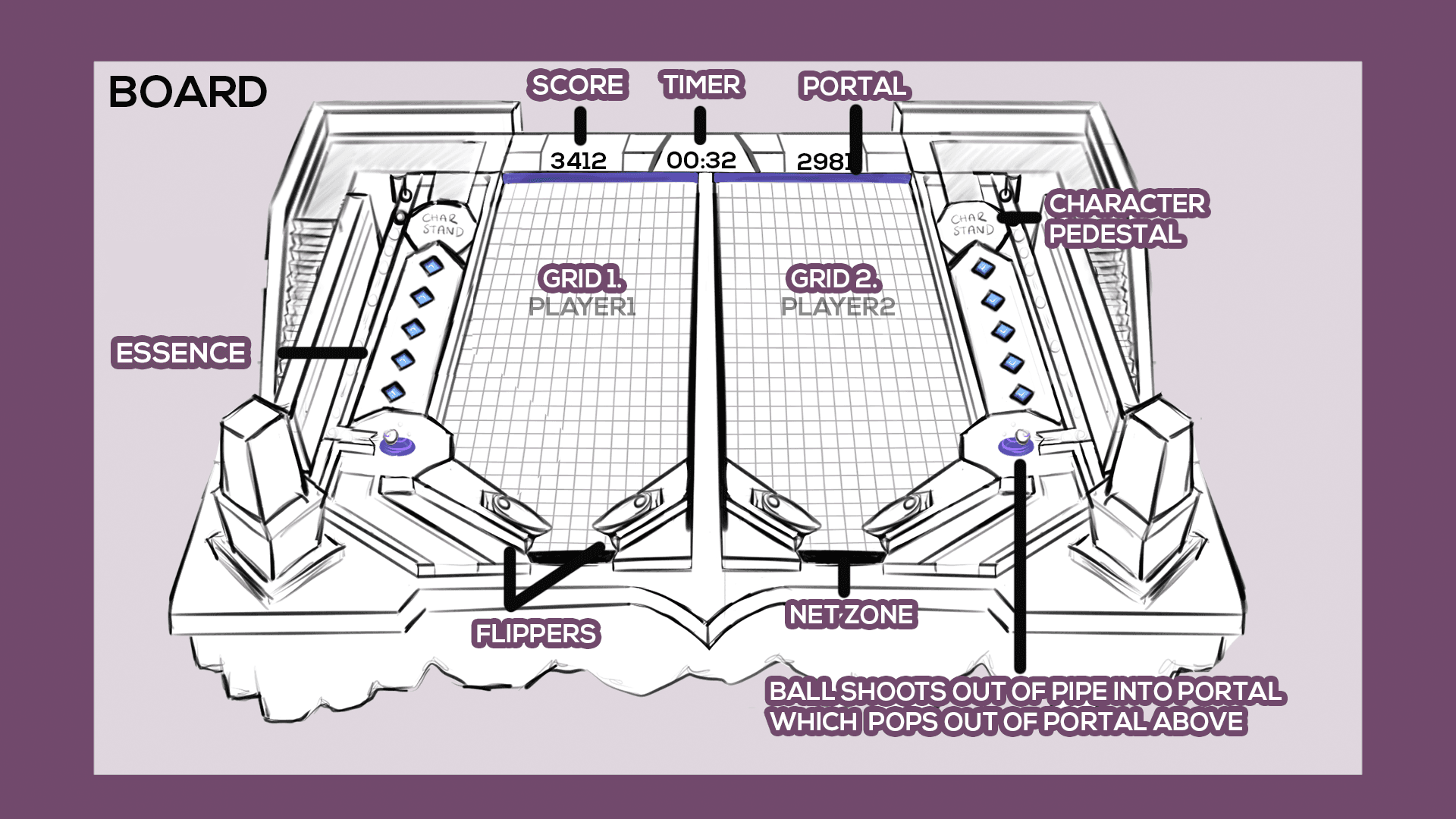
Board design
Gameplay footage
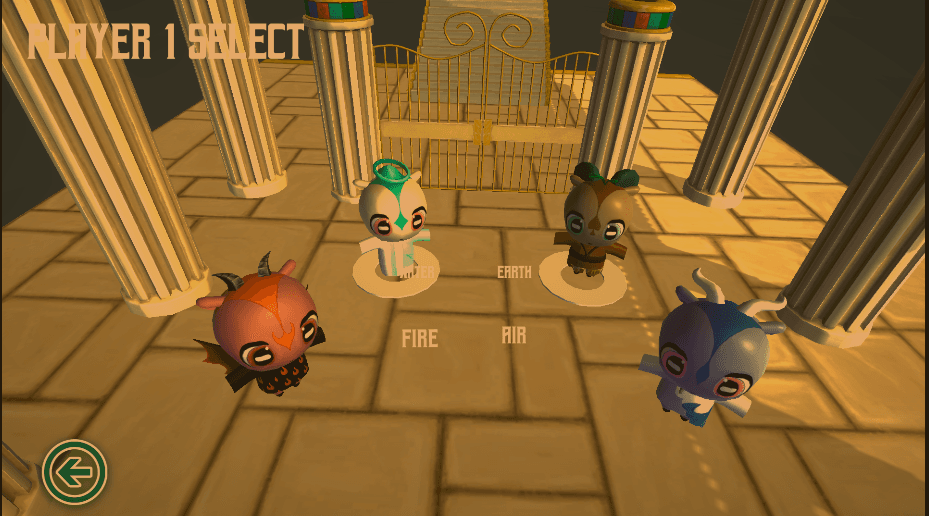
Nomad characters
Character designs by the Round Robin Games art team — not Phillip's work. Phillip implemented gameplay systems for each character's in-game behaviour.
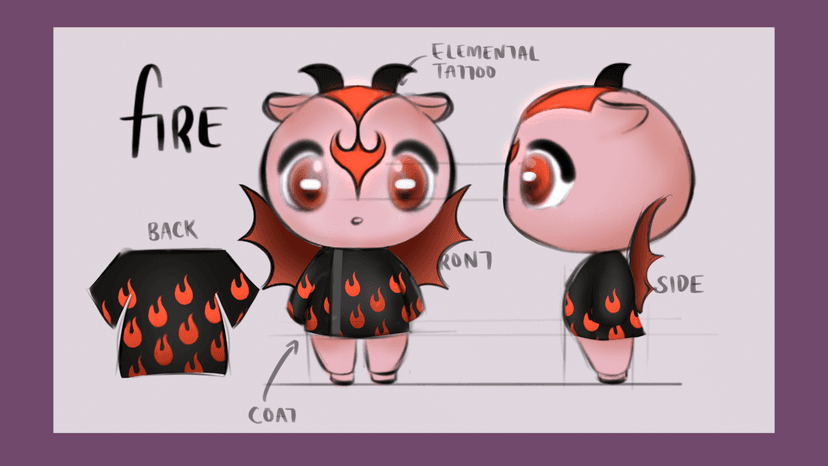
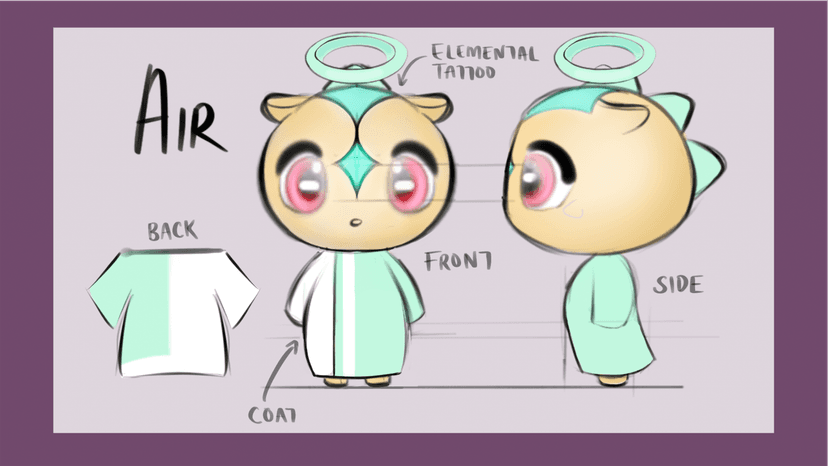
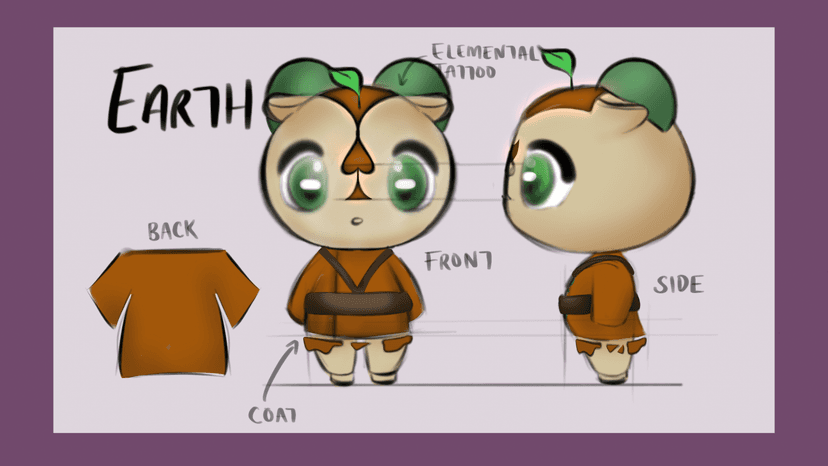
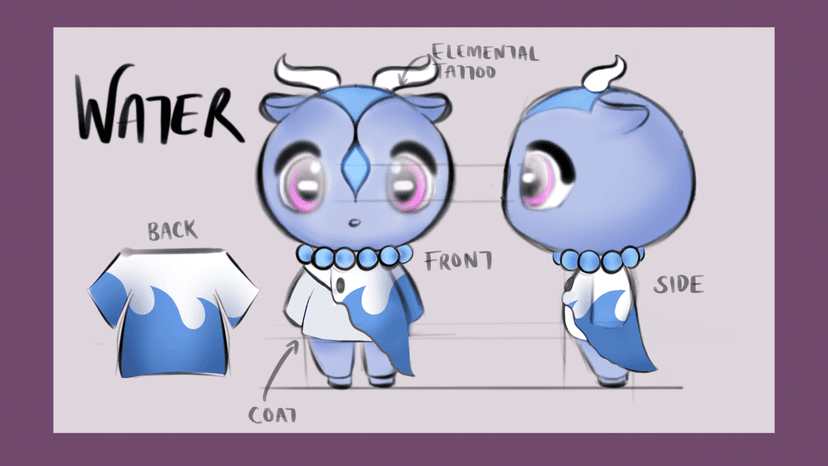
Choose your Nomad
Gameplay loop
- 01
Build Phase (15s)
Players spend Essence to place starting towers in predetermined Build Spaces before pinballs are active.
- 02
Play Phase (5 min)
Pinballs drop onto both boards. Players use flippers to keep balls out of their Netzone while continuing to place and upgrade towers.
- 03
Score & Portal
Towers score points on pinball interactions. The Portal at the top of each board transfers balls to the opponent's side — offence and defence are the same action.
- 04
Nomad Abilities
Each of the 4 Nomad characters has unique active abilities that can swing match momentum.
- 05
Game End
Timer expires. Highest score wins. Maximum 15 pinballs active per side at any time.
How to play
Controls
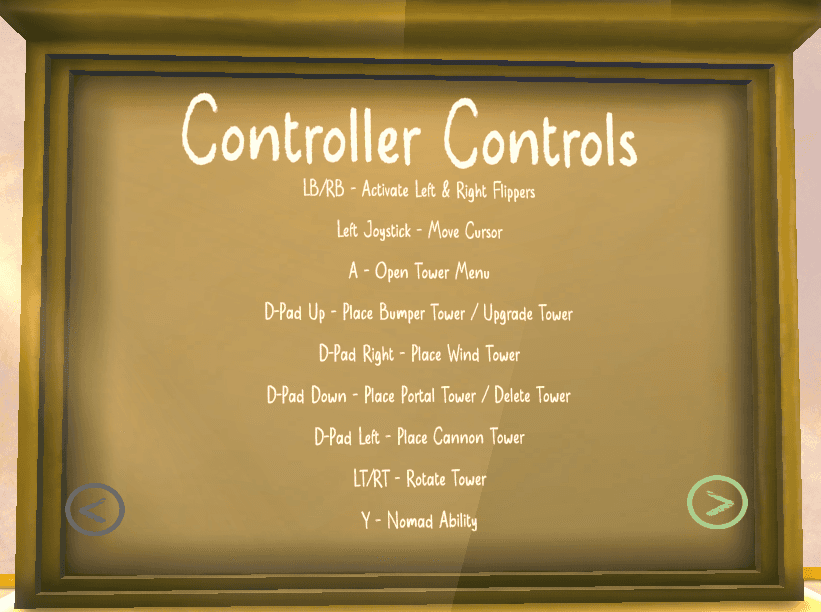
Tower types
Bumper Tower
DeflectionBounces pinballs at unpredictable angles, creating chaos on the opponent's board and scoring on each hit.
Cannon Tower
DirectionalFires the pinball at a controlled trajectory toward the Portal, maximising cross-board transfer opportunities.
Wind Tower
Area controlEmits a push force that slows or redirects incoming pinballs, buying the player more time on flippers.
Portal Tower
TransferCreates a secondary portal entry on the board, increasing the frequency of cross-board pinball transfers.
My contributions
Implemented tower placement, upgrade, and interaction systems in C#
Physics programming — flipper controls, ball behaviour, netzone collision and penalty logic
Portal transfer system — ball crosses to opponent's board via the top portal
Contributed to GDD sections: gameplay loop, screen flow, UI layout, and balance documentation
Nomad character ability system — 4 characters with distinct powers that modify match tempo
FMOD audio integration — sound banks for ball, BGM, towers, nomad abilities, and UI